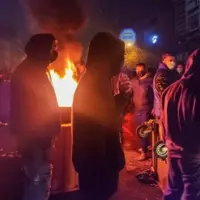
(LONDON) — Erfan Soltani is one of thousands of Iranian protesters who have been arrested amid deadly anti-government protests nationwide, according to his family and human rights organizations.
Days after his arrest last week in Fardis — near the capital of Tehran — the 26-year-old was sentenced to death following an expedited trial, according to his second cousin, Somayeh, who has drawn attention to his case as ongoing internet and communication blockages limit information coming out of Iran about the protests.
“As someone who is an activist myself and who has fought this regime for many years, I felt it was my right — and my duty — to be Erfan’s voice outside the country, despite all the pressure and sanctions that fall on families,” Somayeh, who is based in Germany, told ABC News in an interview in Persian on Wednesday.
Somayeh, who did not want to share her last name, said Soltani’s family members had been told that he would be executed on Wednesday.
She was informed through the family that he had not been executed that day, she told ABC News. Somayeh added that the family said they had not seen her cousin in person yet.
President Donald Trump said on Wednesday that he had been told by “very important sources on the other side” that the executions are not happening.
“It was supposed to be a lot of executions today, and the executions won’t take place,” Trump said during remarks from the Oval Office on Wednesday.
Following President Trump’s remarks, the Islamic Republic judiciary media center announced Thursday that Soltani was not sentenced to death.
The judiciary, as quoted by the Islamic Republic of Iran Broadcasting (IRIB), said Soltani was currently being held at the central penitentiary in the city of Karaj on charges of “gathering and colluding against the country’s internal security and propaganda activities against the regime.” If convicted, the judiciary said, Soltani would be imprisoned but not executed, as “the death penalty does not exist in the law for such charges,” according to IRIB.
Reacting to the latest Islamic Republic judiciary’s announcement, Somayeh, said she is “happy to hear the news” but is still “concerned.”
“I am happy to hear this news from the media, but there is still concern because as far as we know, no contact has been made and Erfan is still in prison. We hope that his sentence will be completely overturned and he will be released,” Somayeh told ABC News Thursday morning.
In an interview with Fox on Wednesday, the Iranian foreign minister said there were no hangings on Wednesday, and that there won’t be for the rest of the week.
Somayeh said she is speaking out about her cousin, whom she described as a “kind soul” who is “so compassionate to people,” in hopes of having his sentence overturned.
“I felt responsible to make sure his voice was heard, so that maybe this sentence could be overturned — and beyond Erfan,” she said. “He is not the first and he will not be the last person to receive a death sentence overnight.”
According to the Human Rights Activists News Agency (HRANA), Iran carried out an “unprecedented” number of executions last year. In 2025, there were 2,063 recorded executions, the highest annual figure over the past 11 years, according to the report from the group.
Soltani’s case has been highlighted by international human rights groups such as the Hengaw Organization for Human Rights and Amnesty International, which said the international community must call on Iranian authorities to “immediately halt all executions.”
“Amid the Iranian authorities’ unprecedented crackdown on ongoing nationwide protests, marked by mass killings and sweeping arrests, concerns are mounting that authorities will once again resort to swift trials and arbitrary executions to crush and deter dissent,” Amnesty International said in a statement on Monday that highlighted Soltani’s case. “Iran’s head of judiciary ordered prosecutors to ‘act without leniency’ against protesters heightening fears for the lives of detained protesters and other dissidents.”
The first marches took place in late December in downtown Tehran, with participants demonstrating against rising inflation and the falling value of the national currency, the rial. As the protests spread, they have taken on a more explicitly anti-government tone.
More than 2,500 people have died during nationwide protests in Iran since Dec. 28, HRANA said Wednesday. The HRANA data relies on the work of activists inside and outside the country. ABC News cannot independently verify these numbers.
The Iranian foreign minister told Fox News on Wednesday that “hundreds” are dead.
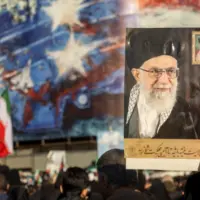
Iranian Supreme Leader Ayatollah Ali Khamenei and top Iranian officials have said they are willing to engage with the economic grievances of protesters, though have also framed the unrest as driven by “rioters” and sponsored by foreign nations, prime among them the U.S. and Israel.
ABC News’ David Brennan contributed to this report.
Copyright © 2026, ABC Audio. All rights reserved.