Firefighters on the Deschutes National Forest are planning prescribed burning on the Bend-Fort Rock Ranger District starting Tuesday if conditions are favorable.
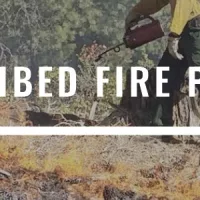
Firefighters plan to conduct up to 2008 acres of prescribed burning on the Pine Mountain Prescribed Burn located on Pine Mountain 14 miles southeast of Bend starting Tuesday and continuing through Friday if conditions remain favorable. Ignitions are slated for around 350 acres each day of ignitions.
Ignitions are planned for 9:30 a.m. Smoke will be highly visible from Highway 20, Bend and the surrounding area. Residual smoke will be visible following ignitions. Residents in the Pine Mountain area are encouraged to keep doors and windows closed to minimize smoke impacts. Smoke impacts are most likely overnight and in the early morning hours.
The Pine Mountain area will be temporarily closed to traffic, including off-highway vehicles and paragliding. Forest Service Road 2017 will be closed as well as the Pine Mountain Campground and dispersed recreation opportunities. Closures will remain in place for multiple days while mop-up and patrol operations continue after the prescribed burn is complete. Firefighters will reopen roads and recreation sites once conditions have been assessed and are determined safe for the public.
A temporary flight restriction (TFR) will be in place over the area. Ignitions will be conducted by hand and aerial ignitions.
Prescribed burns can protect homes from tragic wildfires. Fire management officials work with Oregon Department of Forestry smoke specialists to plan prescribed burns. Prescribed burns are conducted when weather is most likely to move smoke up and away from our communities. While prescribed fire managers take significant preventive measures, it’s likely that communities may experience some smoke during or immediately after a prescribed burn.
What does this mean for you?
During prescribed burns, smoke may settle in low-lying areas overnight and in the early morning hours.
- All residents are encouraged to close doors and windows at night to avoid smoke impacts.
- If available, use a portable air cleaner. Air cleaners work best running with doors and windows closed. You can also create a DIY air cleaner.
- If you have a central air system, use it to filter air. Use high-efficiency filters if possible.
- When driving in smoky areas, drivers should slow down, turn on headlights and turn air to recirculating.
- If you have heart or lung disease, asthma, or other chronic conditions, pay attention to how you feel and if symptoms of heart or lung disease worsen, consider contacting your health care professional.
- Go to centraloregonfire.org to learn more about smoke safety and prescribed burning in Central Oregon and visit centraloregonfire.org/protect-
your-health for more smoke preparedness resources.
For more information on prescribed burning in Central Oregon, visit centraloregonfire.org and for information specific to the Deschutes National Forest visit fs.usda.gov/deschutes. Follow us on X @CentralORFire. Text “COFIRE” to 888-777 to receive wildfire and prescribed fire text alerts.
About the Forest Service: The USDA Forest Service has for more than 100 years brought people and communities together to answer the call of conservation. Grounded in world-class science and technology– and rooted in communities–the Forest Service connects people to nature and to each other. The Forest Service cares for shared natural resources in ways that promote lasting economic, ecological, and social vitality. The agency manages 193 million acres of public land, provides assistance to state and private landowners, maintains the largest wildland fire and forestry research organizations in the world. The Forest Service also has either a direct or indirect role in stewardship of about 900 million forested acres within the U.S., of which over 130 million acres are urban forests where most Americans live.