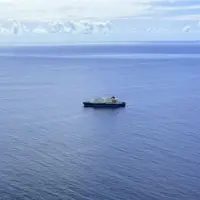
(LONDON) — An epidemiologist from the World Health Organization (WHO) said Thursday that the suspected hantavirus cluster aboard a cruise ship is not the beginning of another COVID-19 pandemic.
Eight cases are currently being reported by the WHO, including five laboratory-confirmed cases and three suspected cases. Of those eight cases, three have died.
Dr. Maria Van Kerkhove, an infectious disease epidemiologist and acting director of epidemic and pandemic management at the WHO, was asked during a press conference what the difference was between this cluster and the early days of the COVID pandemic.
“I want to be unequivocal here. This is not SARS-CoV-2. This is not the start of a COVID pandemic. This is an outbreak that we see on a ship,” Van Kerkhove said.
Van Kerkhove explained that hantavirus doesn’t spread in the same way that coronaviruses do, but rather through “close, intimate contact.” Most hantaviruses don’t transmit from person to person.
“The actions that are being taken on board [the ship] are precautionary to prevent any onward spread,” she added.
There appears to be one confirmed case and two suspected cases that have not been added to the WHO’s official count yet.
Officials told ABC News a female individual, who was on a KLM flight with the Dutch female patient who later died, developed symptoms and was admitted to a hospital. Leiden University Medical Centre in the Netherlands confirmed on Thursday that the female patient has hantavirus and is receiving care.
Additionally, two Singapore residents who were on board the ship are currently being monitored. Singapore’s Communicable Diseases Agency said it was notified of the individuals on May 4 and May 5.
“They have been isolated at the National Centre for Infectious Diseases, where they are being tested for hantavirus. The risk to the general public in Singapore is currently low,” the agency said.
The agency added that test results are pending, with one resident having a runny nose and the other is asymptomatic.
Three deaths have been recorded so far, including a married Dutch couple. The 70-year-old male patient died on April 11, and his body was taken off the ship on the island of St. Helena on April 24. His 69-year-old wife disembarked on the same day, and her health rapidly deteriorated. She died at an emergency department in South Africa on April 26.
A third passenger, a German woman, presented with pneumonia symptoms starting on April 28, according to the WHO. The woman died on May 2 from causes not yet known, according to Oceanwide Expeditions, which operates the cruise ship.
The WHO said 29 people disembarked on St. Helena on the same day that the body of the Dutch male patient and his wife disembarked.
They traveled to 12 countries: Canada, Switzerland, Germany, Denmark, Great Britain, St. Kitts and Nevis, Netherlands, New Zealand, Singapore, Sweden, Turkey and the United States.
The disembarked guests have all been contacted by Oceanwide Expeditions. In the U.S., local authorities in three states — Arizona, Georgia and California — are monitoring the disembarked passengers and are conducting contact tracing, None have shown signs of illness at this time.
Anais Legend, technical lead for viral hemorrhagic fevers at WHO, said during the press conference on Thursday that “step-by-step guidance is being developed” for the disembarked passengers and that the WHO is coordinating with national authorities.
Anyone with any signs of symptoms will be isolated while other passengers have their risk exposure evaluated.
Public health experts said they expected a more robust response from the Centers for Disease Control and Prevention (DC) and the National Institutes of Health.
“The CDC would typically be asked by WHO or by a country to help in technical assistance,” Dr. Carlos del Rio, an H. Cliff Sauls distinguished professor of medicine at the Emory University School of Medicine, told reporters on Thursday.
Typically, CDC teams would be deployed to an area, he said, and the teams would perform contact tracing and interviews and conduct an outbreak investigation.
“I would envision by now, many, many days ago, we would have seen a team from CDC deployed to the area,” he added.
Dr. Jeanna Marrazzo, CEO of the IDSA, added that she would have expected a CDC press briefing, an alert from the agency’s Health Alert Network or information from the NIH on potential treatments in the pipeline that could receive emergency use authorization to help treat hantavirus patients.
Marrazzo said she is not aware that conservations about potential therpaies at NIH aren’t happening but that it “doesn’t give me a lot of assurance or reassurance that we are not hearing any of that.”
The WHO said during Thursday’s press briefing that the U.S. is coordinating with the global health agency in a technical capacity.
Because the cluster is limited and confined to a cruise ship, the “idea of sending messages across the world and panicking everyone is not required,” said Dr. Abdirahman Mahmoud, director of the WHO’s health emergency alert and response operations.
He added that the WHO is “informally” aware that contact tracing has been done of the U.S. passengers who disembarked last month and are back home.
Copyright © 2026, ABC Audio. All rights reserved.